Before you build
How to validate a product idea when you have no connections
Evidence from strangers, before you write the code.
For solo builders with an idea and no network. Validated means evidence, not encouragement: the problem named in search, pain nobody prompted, gaps in what people already pay for, strangers confirming it and, last, somebody paying. Use the checklist below; each step has clicks, a filled example and a template to copy.
The seven steps
One example runs through all seven: a freelance designer whose clients pay late.
- Write the hypothesis: one sentence, go and kill rules.
- Check search demand: Keyword Planner, Trends, page one.
- Find unprompted pain: ten threads, one DM.
- Read the worst reviews: one complaint table.
- Talk to strangers: 10–15 calls, one scorecard.
- Ask for money: a payment link or a paid pilot.
- Go, pivot or kill: against your step-1 rules.
1. Write the hypothesis
Outcome: a sentence you could be wrong about, and the rules that decide it.
Copy this card
- I believe [specific person] will pay (or switch workflows) for [specific outcome] when [painful moment], because today they [current workaround] and it costs them [time / money / risk].
- Price guess______
- Go ruleby ______, I will have seen ______
- Kill ruleif by ______ I have fewer than ______, I stop or reframe
Too broad: "busy professionals need better productivity." Name the person and the moment.
Filled in: the invoice-chase example
Every later step reuses it.
- PersonFreelance designers who invoice clients monthly
- OutcomeLate invoices chased without writing the awkward email
- Painful momentThe day an invoice goes past due
- WorkaroundA spreadsheet and hand-written reminders
- CostHours a month, and cash flow
- Price guessA small monthly fee, written down now
- Go ruleRepeating pain, and 3 paid commitments in 3 weeks
- Kill ruleFewer than 3 serious commitments in 3 weeks
2. Check search demand
Outcome: five keeper phrases, each with a trend and a page-one verdict. 2A: write ten phrases in the buyer’s words and sort them three ways.
- Painhow to chase late invoices · client won’t pay invoice what to do · freelance designer unpaid invoice
- Shoppingautomatic invoice reminders · invoice reminder software for freelancers · best invoicing app with reminders · FreshBooks alternative
- Learninglate payment email template · polite payment reminder email · how to get clients to pay on time
Pain and shopping phrases point at a product; learning phrases prove less.
2B. Keyword Planner, click by click
Free with a Google Ads account; no ad needed.
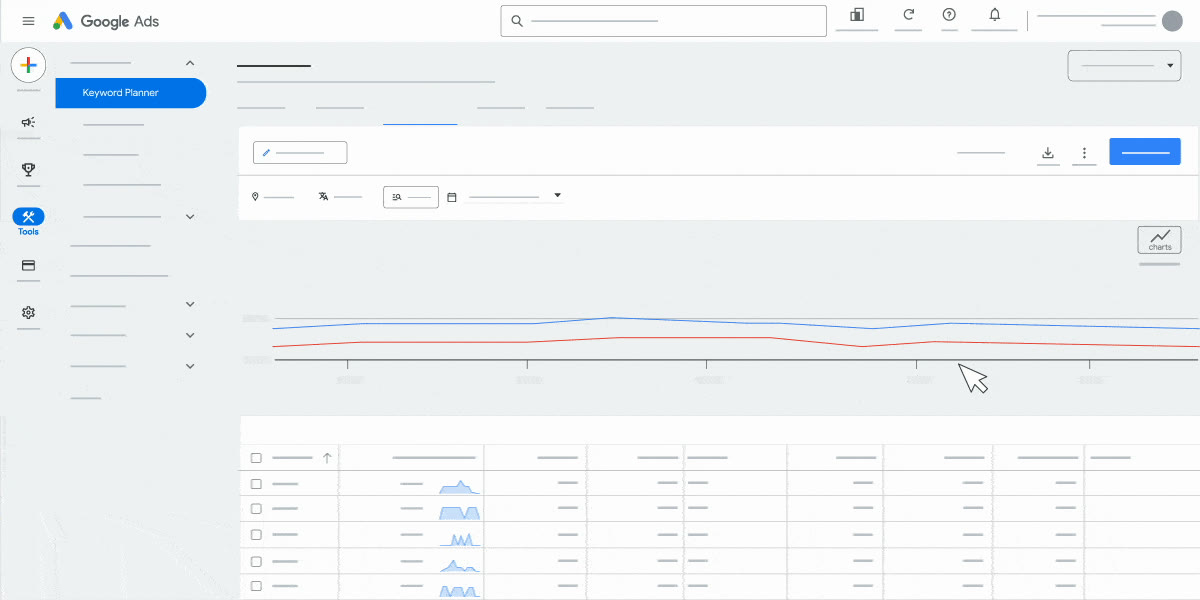
- Open Keyword Planner and sign in.
- Choose Discover new keywords.
- Paste your ten phrases, then Get results.
- Set the location and language to your buyer’s market.
- Scan the monthly search ranges, competition and related ideas.
- Pick five keepers: specific, above zero, pain or shopping.
Read the ranges yourself. Someone else’s numbers are not evidence about your market.
2C. Google Trends
Flat, rising or seasonal?
- Open Google Trends, enter a keeper, + Compare two more.
- Check the past 12 months, then 5 years. Note flat, rising or seasonal.
- Related queries → Rising: add new buyer phrases to your list.
2D. Read page one
Search each keeper in a private window. What you see tells you:
- Ads for toolsPeople already pay to solve this.
- Polished tools rankingThe market exists. You need a wedge (step 4).
- Forum threadsPeople are still hunting. Good sign.
- How-to articlesLearning intent. Content, maybe not a product.
Two traps. Nobody searches a product name that does not exist yet. And search demand is not willingness to pay; that is step 6.
3. Find the pain nobody prompted
Outcome: ten threads where strangers describe the problem, and your first calls.
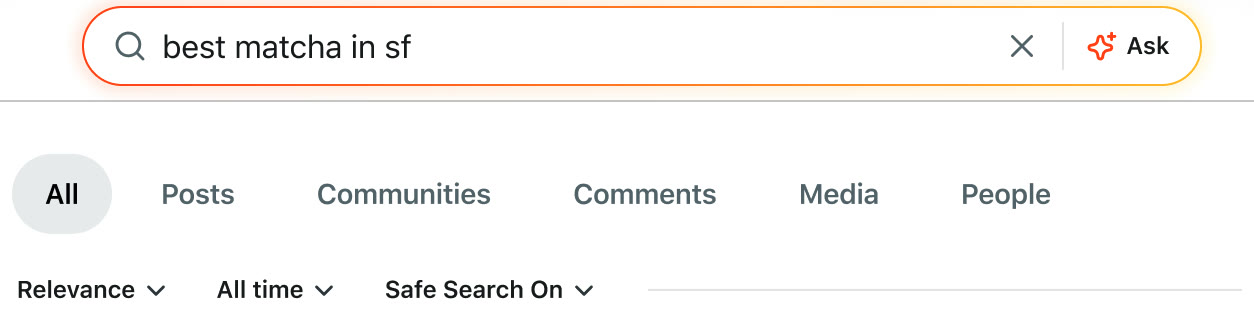
- In Google:
"chase late invoices" OR "client won’t pay" site:reddit.com, with your own step-2 phrases. - On Reddit, search the same words; sort by New, then Top of the year. Repeat on Indie Hackers and HN search.
- Join the 2–3 communities that keep coming up (here, r/freelance) and read their rules.
- Save ten threads in the table below.
- Reply helpfully first, then DM the people who described it best.
Your save table
One row per thread; the first is filled in.
| # | Link | Workaround | Cost | Asks for a tool? | Recruit? |
|---|---|---|---|---|---|
| 1 | thread URL | Spreadsheet plus reminder emails every Friday | A couple of hours a week | Yes | Yes |
| 2 | |||||
| 3 |
Recruit the people who named the cost in their own words.
DM template
Specific, and no link.
Copy and adapt
- Saw your comment about [their workaround]. I’m talking to people who deal with [the problem] this month, not selling anything. Free for a 15-minute call about how you handle it today?
4. Read the competitors’ worst reviews
Outcome: the complaint every tool shares, and a wedge that fixes it.
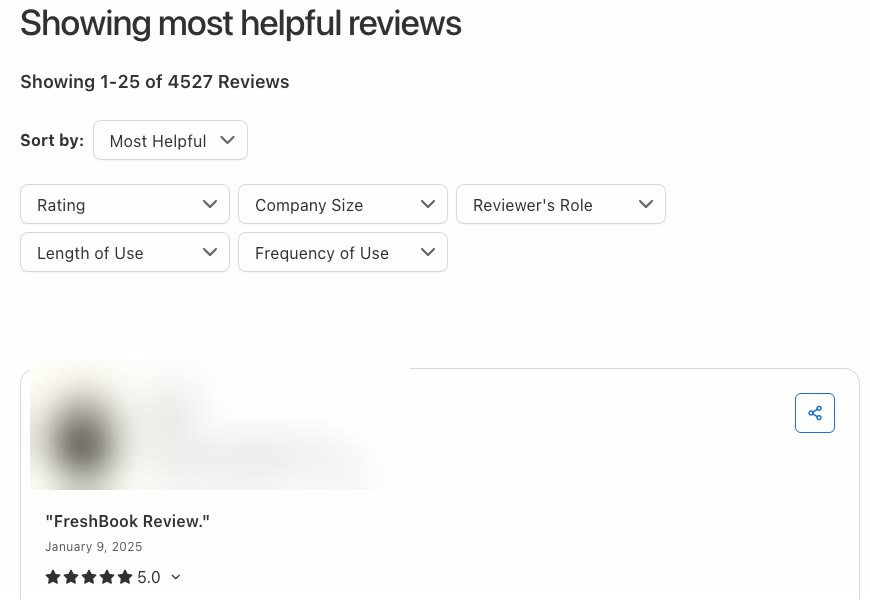
Your complaint table
The row every tool shares is the gap.
| Recurring complaint | Tool A | Tool B | Tool C | Thin fix for our buyer? |
|---|---|---|---|---|
| Cannot chase late invoices automatically | count | count | count | Yes: the wedge |
| Too expensive for one person | ||||
| Setup takes too long |
Zero competitors is not a green light; it can mean nobody pays for this.
5. Talk to strangers, not friends
Outcome: 10–15 scored calls. The rules are the Mom Test (Rob Fitzpatrick’s book).
- Ask about the pastWhat they did, not what they would do.
- Do not pitchPeople are polite about ideas.
- Listen for their wordsIf you have to explain the problem, that is a no.
Outreach and the five questions
For LinkedIn or X, then the whole call.
Copy and adapt
- MessageHi [name], you posted about [the problem]. I’m researching how freelancers handle it, not selling. Would 15 minutes this week work?
- Q1When did this last happen?
- Q2What did you do instead?
- Q3What have you already tried or paid for?
- Q4What happens if you do nothing?
- Q5What would make this urgent this month?
Your scorecard
Gold: paid for a workaround, and urgent now.
| Person | Segment fit | Paid workaround? | Urgent this month? | Gold / polite / no |
|---|---|---|---|---|
| Designer from the thread | Yes | Yes: an assistant, a few hours a month | Yes: two invoices overdue | Gold |
| 2 | ||||
| 3 |
6. Ask for money
Outcome: at least one payment, deposit or signature at a real price.
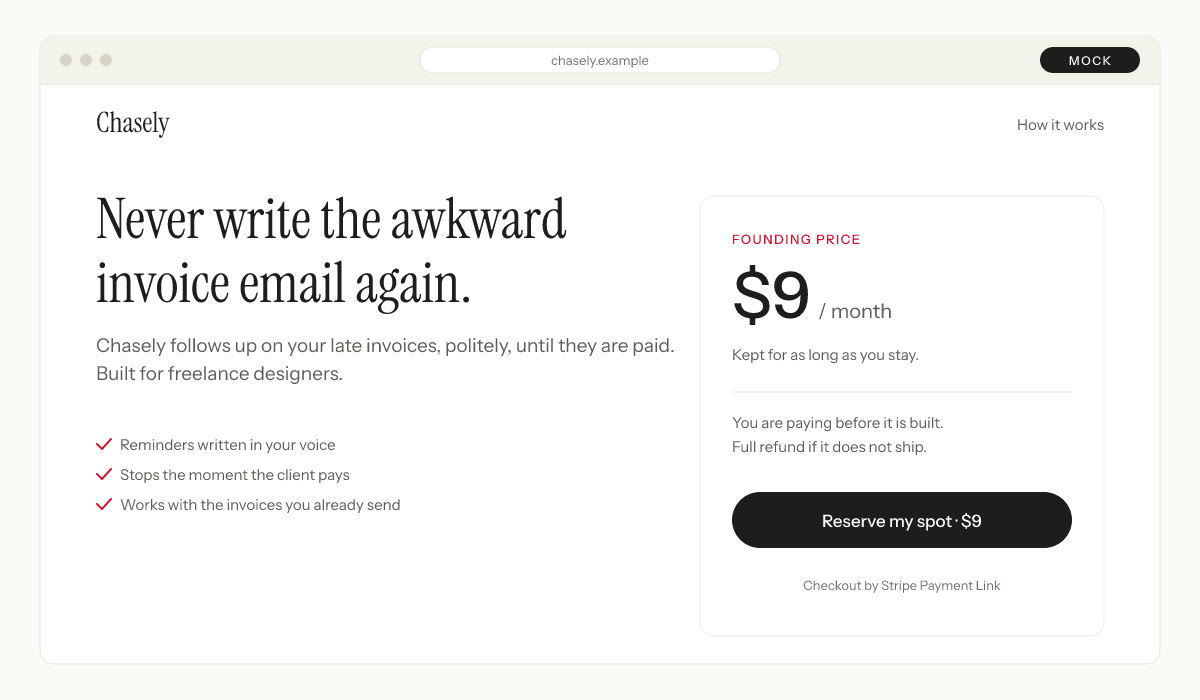
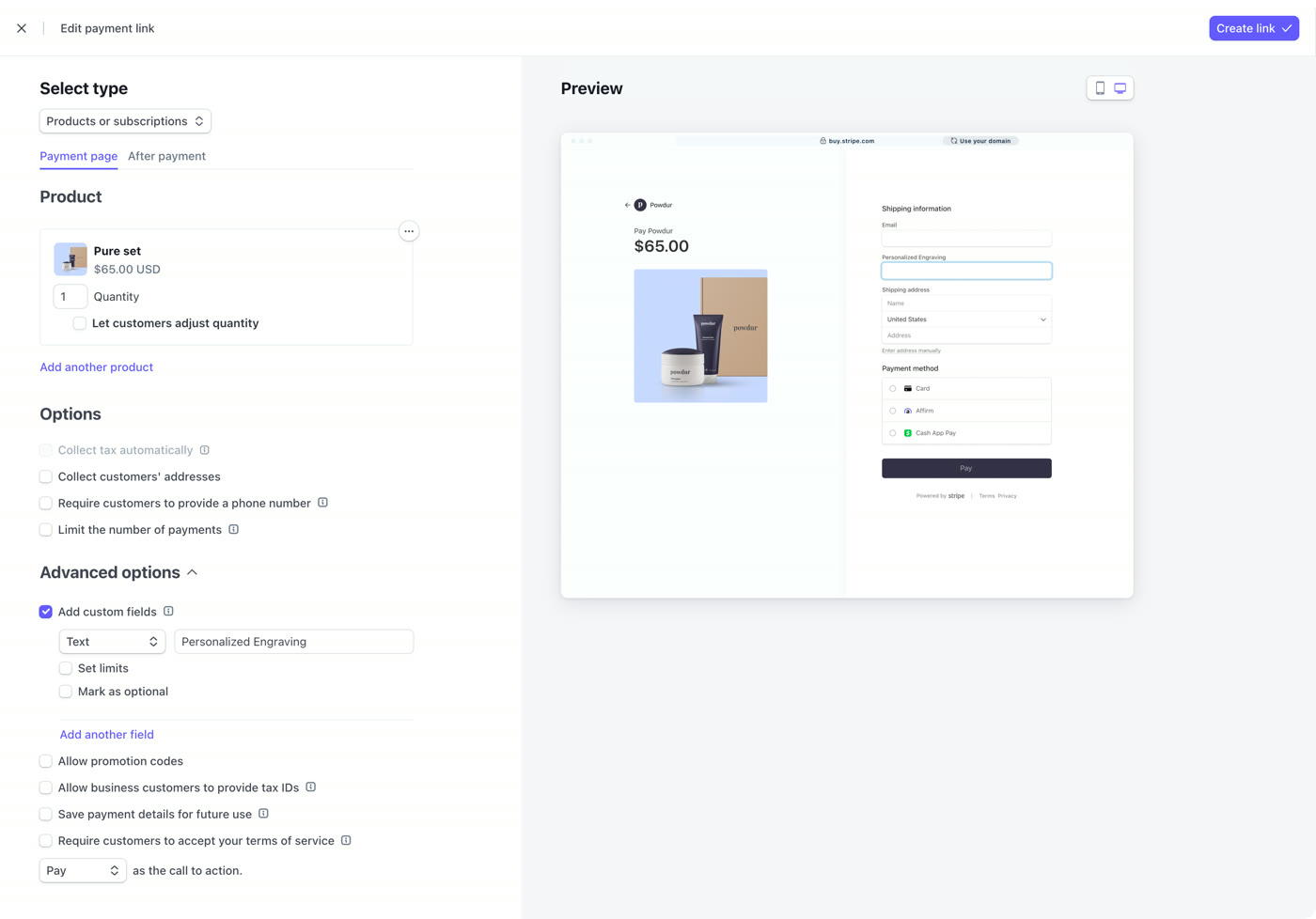
- Stripe Payment LinkDashboard → Payment Links → New → product and price → Create link. Send it to your gold calls. Stripe’s guide.
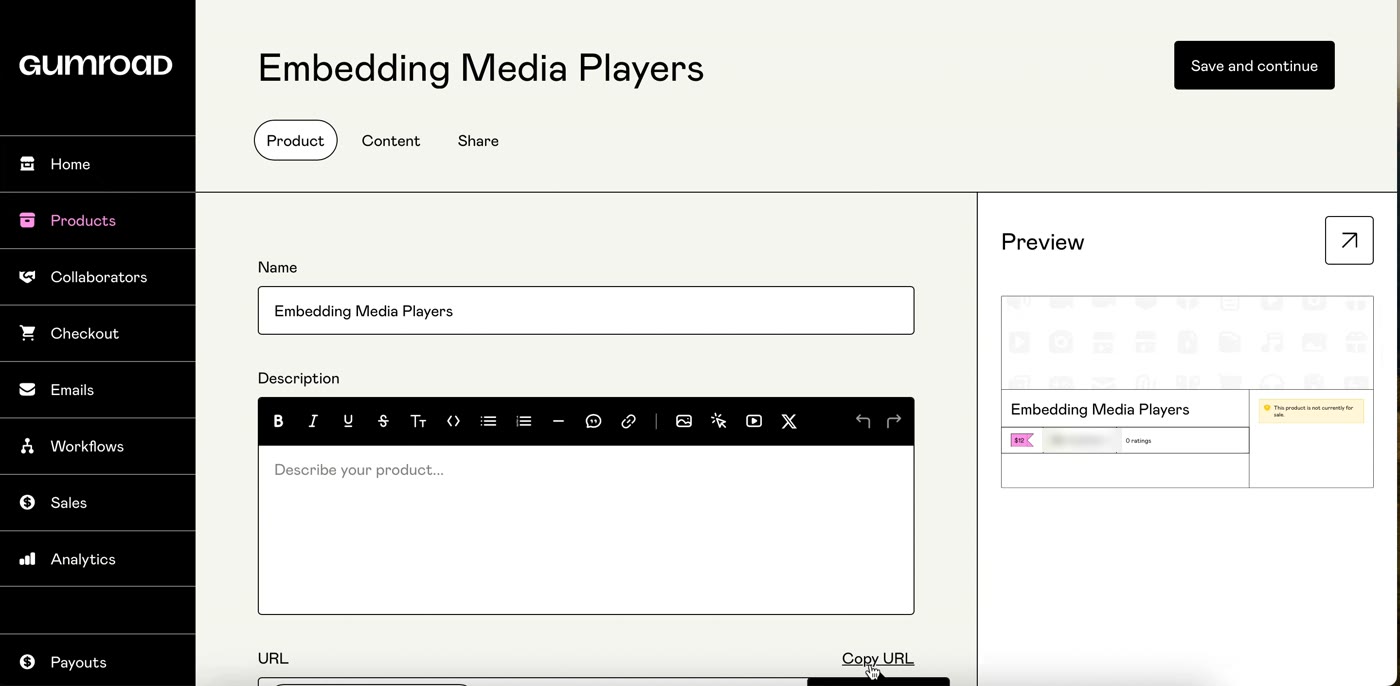
- GumroadGumroad: New product → name the outcome → price → Publish. Quicker without a Stripe account.
- Paid pilotChase 3–5 people’s invoices by hand this week, for a fixed price.
- Letter of intentFor B2B: signed, at a stated price.
Refundable if you do not ship. An email signup is interest, not payment. Your bar is the step-1 card, not someone else’s conversion rate.
7. Go, pivot or kill
Outcome: a decision against your step-1 rules. Timebox: two to four weeks.
- GoSame pain across threads, reviews and calls, plus a money signal. Build the smallest version, then the launch playbook, SaaS or app launch.
- PivotMixed signals. New buyer, moment or offer, new card, rerun steps 2–6. Not more features.
- KillKill rule hit. Write down what you learned.
When you start shipping
Evidence is done; now distribution.
A lasting listing, once there is something to list
- Put a lasting free listing live — reviewed, permanent, do-follow, readable by assistants — not only a one-day launch spike. A listing is distribution, not validation.
- Submit your product · What a listing gets you
Questions founders ask
Short answers. The sections above are the long ones.
How do I validate a product idea without building it?
Desk research (search + communities + review gaps) → problem interviews → a real pay ask. Building comes after evidence, not before.
How do I validate a SaaS idea if I have no network?
Start in public places buyers already talk (Reddit, forums, review sites), offer help, then ask for short calls. Cold outreach works when it is specific and problem-led.
Is search volume enough to validate a startup idea?
No. Volume shows problem awareness and language. It does not prove someone will pay you. Pair it with complaints, workarounds, and a money signal.
How many customer interviews do I need before I build?
Enough to see a repeating pattern — often on the order of 10–15 target-segment conversations — against criteria you wrote down first. More interviews won’t fix a fuzzy segment.
What’s the difference between interest and willingness to pay?
Interest is “sounds cool.” Willingness to pay is a card, deposit, pilot, or signed LOI at a real price.
Do competitors mean my idea is already taken?
Usually they mean people already pay to solve the problem. Read their worst reviews for the gap you can own.
When should I stop validating and start building?
When your pre-written go criteria are met inside a timebox — typically clear problem evidence plus at least a weak money signal — not when you feel certain.
Related guides
What to read once the answer is go.
Evidence first, then the build
None of it needs a network. All of it needs you to decide in advance what would change your mind.